

The Tenfold Path: Unlocking the Structure of the Bhagavata Purana
BHAGAVATA PURANA DEEP DIVE - Edition 32 - A Journey Through the Ten Themes That Structure the Bhagavata Purana
The Bhagavad Gita reveals Krishna’s words and instructions, while the Bhagavata Purana unveils His heart and nature—to know Krishna fully, one must hear both His voice and His story, and that’s exactly what this Deep Dive series offers: a guided journey into the soul of devotion.
In the sacred dialogue between sage Shuka and King Parikshit, Book 2, Chapter 10 of the Bhagavata Purana serves as a pivotal moment. Here, the sage delineates the ten core themes that form the foundation of this profound text, offering a roadmap for spiritual seekers navigating the vast expanse of Vedic wisdom.
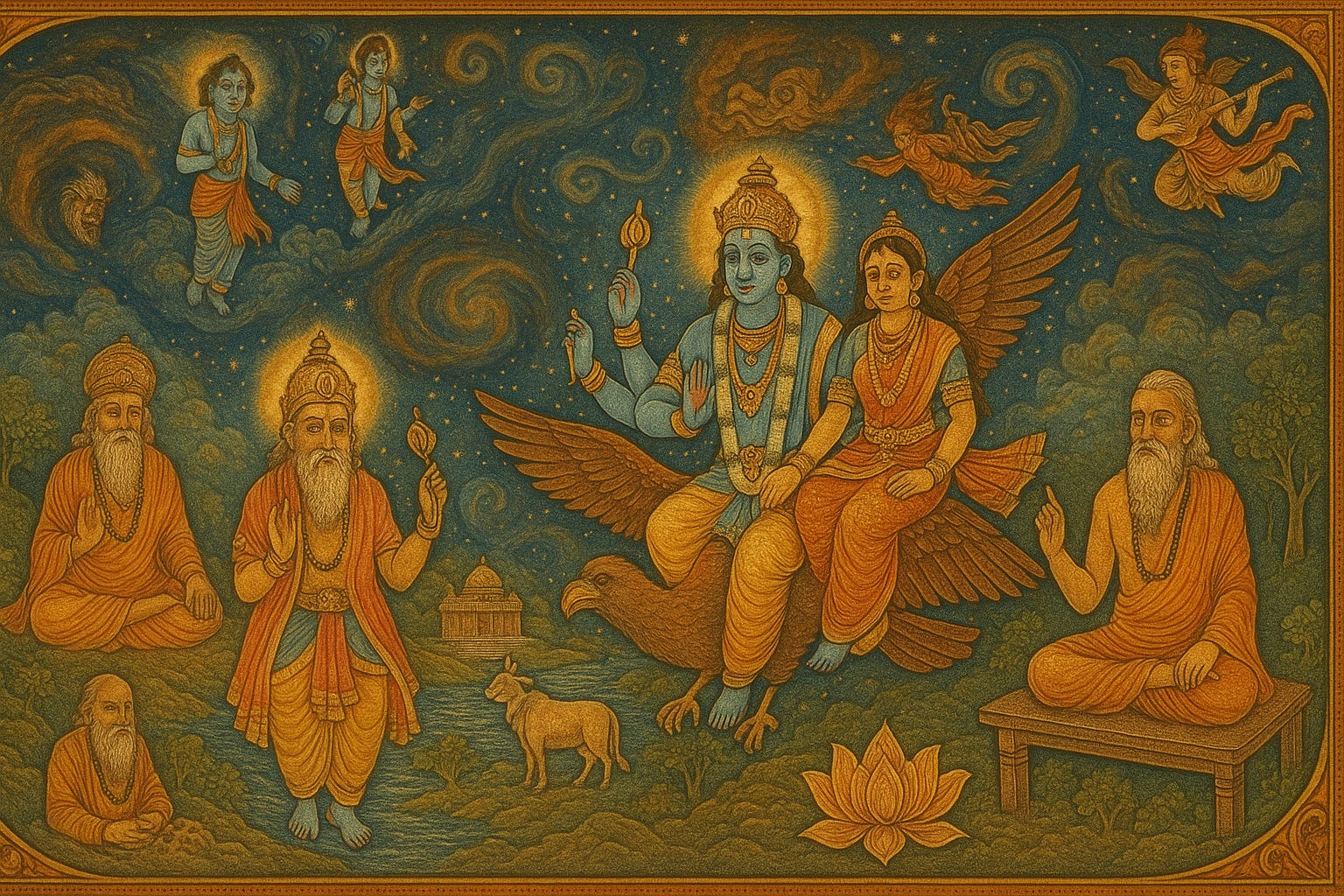
1. Sarga – The Initial Creation
The journey begins with the concept of sarga, the primary creation. This refers to the manifestation of the fundamental elements and the initial cosmic order established by the Supreme. It sets the stage for all subsequent developments in the universe.
2. Visarga – The Secondary Creation
Following the initial creation, visarga encompasses the secondary creation, where the cosmic elements are further organized and diversified. This process involves the activities of various divine beings who shape the universe's intricate structures.
3. Sthana – The Cosmic Order
Sthana pertains to the maintenance of the cosmic order. It highlights the stability and harmony within the universe, ensuring that all entities function within their designated roles and realms.
4. Poshana – The Lord’s Protection
The theme of poshana emphasizes the nurturing and protective aspects of the Divine. It illustrates how the Supreme Being sustains and safeguards all living entities, guiding them towards spiritual evolution.
5. Uti – The Impetus for Action
Uti explores the motivations and desires that drive beings to act. It delves into the karmic impulses and the underlying forces that propel the cycle of action and reaction in the material world.
6. Manvantara – Cycles of Cosmic Time
The concept of manvantara introduces the cyclical nature of time, governed by the reigns of various Manus. Each cycle brings about changes in cosmic administration, reflecting the dynamic aspect of the universe's governance.
7. Ishanukatha – Narratives of the Divine
Ishanukatha encompasses the stories and pastimes of the Supreme Being. These narratives serve as spiritual teachings, illustrating the Lord's interactions with the world and offering insights into divine qualities and actions.
8. Nirodha – The Process of Dissolution
Nirodha addresses the dissolution of the universe, where all elements return to their original state. This theme underscores the transient nature of the material world and the eventual return to the unmanifested state.
9. Mukti – Liberation from Material Bondage
The pursuit of mukti signifies the soul's liberation from the cycle of birth and death. It represents the attainment of spiritual freedom and the realization of one's true nature beyond material confines.
10. Ashraya – The Ultimate Shelter
Finally, Ashraya denotes the ultimate refuge, the Supreme Being Himself. Recognizing the Lord as the foundational support of all existence, this theme encapsulates the essence of surrender and devotion.
These ten themes are not isolated topics but interwoven aspects of a comprehensive spiritual framework. They guide the seeker from understanding the universe's creation to realizing the Supreme as the ultimate shelter. By contemplating these principles, one embarks on a transformative journey towards spiritual enlightenment.